
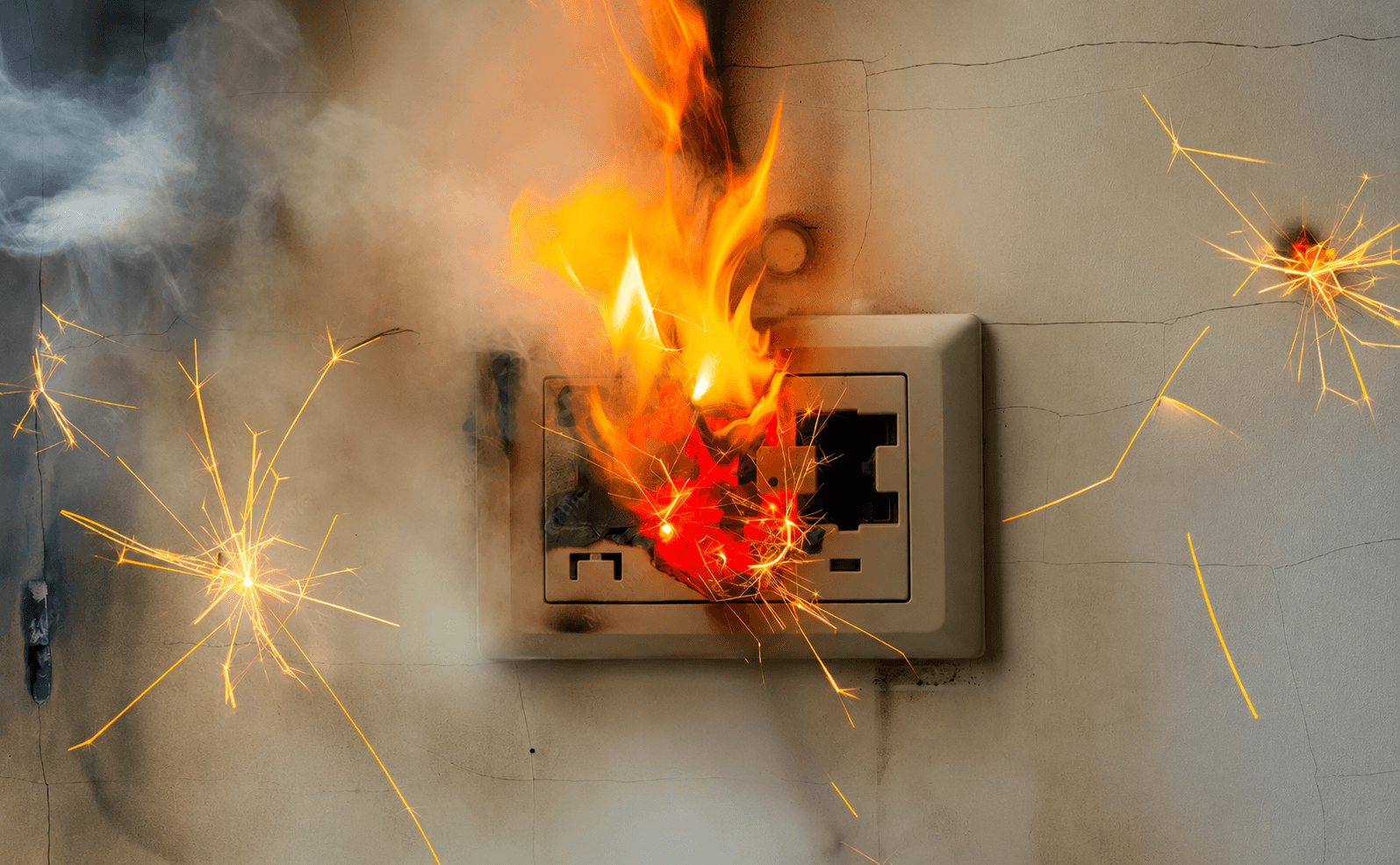
Electrical fires represent a significant threat to residential properties nationwide. Electrical fires are one of the leading causes of property damage and personal injury in homes across the country, yet most remain preventable. Dangers range from concealed faulty wiring to circuits handling excessive electrical loads.
Faulty Wiring: The Hidden Cause of Electrical Fires
Deteriorated wiring systems pose substantial risk, particularly in older residences. Homes built three decades or more ago frequently contain aluminum wiring, outdated knob-and-tube systems, or compromised insulation that fails modern safety standards.
Warning indicators include:
- Flickering lights
- Burning smells near outlets
- Discolored wall plates
- Frequent circuit breaker trips
Overloaded Circuits and Extension Cord Fires
Modern households demand significantly more electrical power than systems designed decades ago can safely provide. When circuits exceed their rated capacity, the wiring heats up, and combustible materials nearby may ignite if protective breakers malfunction.
Extension cords present particular dangers. These temporary solutions, when used permanently, especially coiled, pinched, or damaged, risk overheating and fire initiation.
Prevention strategies:
- Distribute high-wattage devices across multiple circuits
- Avoid chaining extension cords or power strips together
- Install additional outlets professionally rather than relying on temporary solutions
- Monitor for warm outlets or light fluctuations signaling overloaded circuits
Outdated Electrical Panels and Defective Breakers
Electrical panels function as system regulators, distributing power while providing protection during malfunctions. Panels manufactured between the 1960s and 1980s, particularly Federal Pacific and Zinsco models, exhibit documented failure patterns where breakers fail to trip during an overload or short circuit.
Short Circuits and Arc Faults
Short circuits develop when insulation deteriorates or connections loosen, allowing energized wires to contact neutral or ground wires. Arc faults, where electricity jumps across damaged wire gaps, generate extreme temperatures capable of igniting nearby materials, often undetectably within walls.
Arc-fault circuit interrupters (AFCIs) provide detection and protection against these hazards.
Overheating Appliances and Portable Heaters
Equipment failures drive significant fire incidents. Portable heaters demand particular caution, requiring direct wall outlet connections, never extension cords or power strips, positioned a minimum of three feet from flammable items.
Safety guidelines:
- Unplug unused appliances
- Replace devices with damaged or frayed cords immediately
- Clean dryer lint traps regularly
- Never leave cooking appliances unattended
Loose Electrical Connections and Water Damage
Connections loosen over decades of use, causing arcing across small gaps and heat generation. Warm-to-touch outlets or loose-fitting plugs indicate internal connection deterioration.
Water intrusion near electrical components causes corrosion and short circuits, requiring professional inspection before resuming use.
The Bottom Line
Nearly every one of these risks can be identified and resolved with the right professional help. Regular inspections, timely upgrades, and informed daily practices significantly reduce electrical fire hazards. ENE Electrical's licensed electricians perform residential electrical inspections throughout Katy and the greater Houston metro to catch these hazards before they become emergencies.